

Short answer
Ayahuasca contains beta-carbolines that temporarily inhibit MAO-A, an enzyme involved in breaking down serotonin and other monoamines. Combining ayahuasca with antidepressants can therefore have unpredictable effects on serotonin activity, the autonomic nervous system and cardiovascular function. Very few studies have examined these combinations directly. A lack of reported complications does not establish safety, and changing prescribed treatment on your own can also worsen your condition.
Why MAO-A matters
DMT is rapidly metabolized by the enzyme monoamine oxidase. Beta-carbolines from the liana Banisteriopsis caapi temporarily inhibit MAO-A, making DMT active when taken orally. This interaction is central to how the preparation works. A separate article on how ayahuasca works explains the interaction of its main components.
MAO-A is involved in the metabolism of serotonin, norepinephrine and other monoamines. Antidepressants can increase serotonin activity, alter neurotransmitter reuptake, affect liver enzymes, or have multiple mechanisms at once. A brand name alone is not enough to assess these interactions.
An early publication on the combination of ayahuasca and serotonin reuptake inhibitors described the potential risk based on pharmacology. It was not a large controlled trial and does not establish how often adverse reactions occur. It identifies a plausible mechanism for harm, but cannot quantify an individual’s risk.
Why the type of antidepressant matters
Antidepressants include selective serotonin reuptake inhibitors, serotonin and norepinephrine reuptake inhibitors, tricyclics, monoamine oxidase inhibitors, and drugs with other mechanisms. Within the same class, half-life, active metabolites, effects on enzymes, and risk of symptoms after an abrupt change in therapy differ.
Therefore, a simple list of "compatible" and "incompatible" names would be misleading. It would not take into account concomitant medications, liver and kidney function, duration of treatment, current symptoms, and reason for prescribing. Drugs in the same class can pose different risks depending on the person taking them.
The formulation and treatment regimen also matter: daily medication, a long-acting formulation and a combination of psychiatric medications each require a different assessment. Even if the subjective effect of the psychedelic seems to be weaker, this does not prove that there is no physiological interaction. How the experience feels cannot reliably indicate body temperature, blood pressure or neuromuscular changes.
Serotonin toxicity: what it means
Serotonin toxicity is a clinical condition associated with excessive serotonin activity. Its manifestations may include changes in mental status, autonomic instability, and neuromuscular hyperactivity. A single symptom, such as nausea or anxiety, does not establish the condition: a combination of symptoms and recent exposures must be assessed.
The difficulty lies in the fact that some of the manifestations overlap with the acute effects of ayahuasca: agitation, tremors, vomiting, and changes in heart rate or blood pressure. The combination of symptoms, their severity and how quickly they worsen all matter clinically. An online description cannot reliably rule out a dangerous condition.
High fever, marked confusion, seizures, loss of consciousness, severe agitation, muscle stiffness, or sudden deterioration require immediate evaluation. Tell medical staff the exact names of all medications and substances taken, when they were taken if known, and how the symptoms developed.
Why is direct evidence so limited?
Participant safety is a priority in controlled trials. People with certain psychiatric conditions or current pharmacotherapy are often excluded. As a result, trials may describe tolerability in healthy, selected volunteers, but say almost nothing about someone taking an antidepressant for active depression, anxiety disorder, or another condition.
A systematic review of the interactions of classic psychedelics found dozens of studies overall, but only one involving ayahuasca. This is an important limitation: the results for psilocybin or LSD cannot be automatically transferred to a drink with MAO-A-inhibiting beta-carbolines. The scarcity of data increases uncertainty rather than confirming compatibility.
Incident reports and reviews of adverse events may reveal signals, but often contain incomplete information on composition, amount, other substances, and preexisting conditions. They help identify possible risks, but cannot quantify the risk of a particular combination.
What a medication name cannot tell you
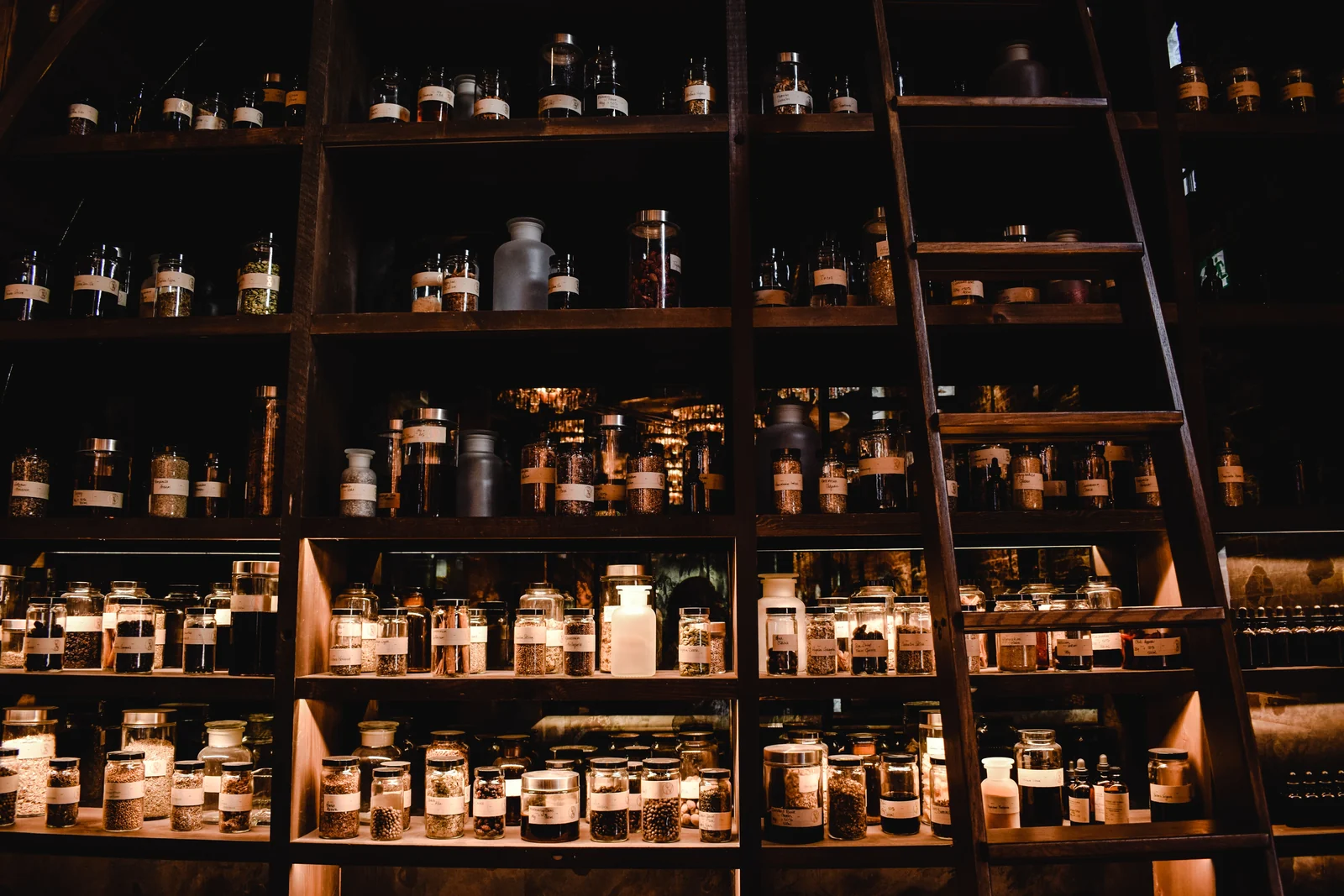
Similar packaging can conceal very different medications. An assessment requires the active ingredient, formulation and dosing schedule, along with details of other medications and supplements. Descriptions such as "something for anxiety" or "a mild antidepressant" leave out information that could change the assessment.
It is equally important to know why the therapy is prescribed and how stable the condition is. The risk may be associated not only with a direct interaction, but also with the return of symptoms after changing treatment without medical guidance. Information about potential interactions is not a plan to change therapy.
Information to discuss with your clinician
An individual assessment requires a medical and medication history. Before speaking with your doctor or clinical pharmacist, gather the following information. It will help them assess the risks, although it cannot establish compatibility on its own.
- names of active substances, forms and method of administration;
- all other prescribed medications, over-the-counter drugs and supplements;
- current mental and physical symptoms, including sleep and blood pressure;
- previous adverse reactions, seizures, fainting or episodes of sudden agitation;
- information on the preparation’s ingredients, if available.
Half-life alone does not define a universal waiting period: active metabolites, accumulation, and individual metabolism may be relevant. A fixed number of days, given without considering medical history, creates a false sense of precision. General factors of increased risk are considered in the article about ayahuasca contraindications.
Why changing treatment on your own also carries risks
Abrupt changes to some antidepressant treatments can lead to dizziness, anxiety, sleep problems, altered sensations, nausea or a return of the underlying symptoms. These effects can overlap with those of sleep deprivation or an intense psychedelic experience, making it harder to identify the cause.
There is also a psychological aspect. The promise of a quick result may lead someone to give up ongoing treatment and be left without adequate support if their condition worsens. Scientific research on the potential antidepressant effect of ayahuasca does not make it a substitute for individually prescribed treatment.
The risk is not limited to one syndrome
Serotonin toxicity has received the most attention, but other interactions are also possible. Ayahuasca can temporarily alter heart rate and blood pressure, and certain antidepressants also affect cardiovascular function, cardiac conduction, arousal, or seizure susceptibility. Concomitant drugs can add a sedative, stimulating or anticholinergic effect.
Because of this, the clinical picture can be mixed. Anxiety, tremors, and palpitations can occur for several reasons; drowsiness does not exclude another dangerous process; vomiting may be part of an acute reaction and at the same time contribute to dehydration. Focusing only on serotonin toxicity can mean overlooking other explanations.
Mental health history also matters. A person being treated for bipolar disorder, major depression, or psychotic symptoms may have a different vulnerability profile than a study participant without such conditions. The name of the drug sometimes indirectly indicates a clinical problem, which also needs to be considered separately from the pharmacological interaction.
Why depression studies do not establish compatibility
Small trials of ayahuasca for depressive symptoms have generated scientific interest, but their design does not address whether it can be taken alongside a particular antidepressant. Participants are selected according to a protocol, comorbidities and substances are controlled, and the study product itself may have a more standardized composition than a mixture outside the laboratory.
Even a statistically significant mean improvement does not mean that everyone will benefit, and does not show the safety of an unstudied combination. Efficacy research and interaction research have different goals. The second requires data on specific substances, pharmacokinetics, physiological parameters and adverse events.
You should be especially careful when reading marketing messages, where the words "quick antidepressant effect" turn into a general recommendation. A scientific publication describes the sample, method and uncertainty; the advertising phrase often removes these boundaries. Without that context, a preliminary finding can sound like advice for an individual.
When reading a study, check whether participants took other psychiatric medications, how long they were followed and which adverse events were recorded. If the current therapy was excluded by the terms of the protocol, the study does not confirm its compatibility with ayahuasca. If the sample is small, the absence of a rare event may simply reflect an insufficient number of observations. This is especially important for serious but infrequent complications.
It is also worth distinguishing between a clinical trial and a post-experience survey. The former better controls the conditions, the latter covers a wider real-world context, but more often depends on memory, errors and incomplete information available about the mixture.
What the evidence shows and what remains uncertain
Ayahuasca beta-carbolines have been shown to inhibit MAO-A and provide oral DMT activity. The general mechanisms of serotonin toxicity and the risk of overlap of multiple serotonergic effects are well described. Pharmacological evidence has long raised concern about combining ayahuasca with serotonin reuptake inhibitors.
At the same time, there is a lack of controlled studies of most specific combinations, data for different formulations of ayahuasca, and reliable estimates of frequency. Some of the findings are a careful extrapolation from the mechanism of MAO-A and general clinical toxicology. These gaps prevent reliable lists of combinations that are guaranteed to be safe.
Sources
- Ayahuasca preparations and serotonin reuptake inhibitors: a potential combination for severe adverse interactions (1998).
- Drug-drug interactions involving classic psychedelics: a systematic review (2024).
- Systematic review of adverse events associated with ayahuasca (2024).
- Serotonin Syndrome - StatPearls.
- Monoamine Oxidase Inhibitors - StatPearls.